
We may earn money or products from the companies mentioned in this post.
A guest post from The Laughing Octopus Clothing: Funny, cool organic cotton t shirts, hoodies and accessories for men, women and children.
Changing fashion, and how to feel good about what you wear
- What is sustainable clothing and why is it important?
- How is sustainable clothing made?
- How does sustainable clothing benefit the environment?
- Why is sustainable clothing more expensive?
This moment has been a long time coming. Covid19 has put a temporary ‘stop’ to normal life. As difficult and strange as the lockdowns have been, there are some good things to have come out of the pandemic.
It has allowed many of us the time to reflect and to rethink our priorities. It has allowed Governments and policy makers time to listen to the peoples’ priorities and to hear the message that a greener and environmentally friendly world is what the majority of people want. More than that, it has allowed the world, for a brief moment in time, to heal.
For many, it has been an eye opener. To see blue skies without the criss-cross of vapour trails from planes. To hear the sounds of nature instead of the constant drone of traffic. And to enjoy some calm, without the normal hustle and bustle of life.Wildlife has been busy restoring itself in this tiny window of opportunity aswell.

A lot of people do not want to go back to how things were and have embraced this chance for change. There has been a move towards more organic, wholesome living with families focusing on baking, growing their own food and finding more sustainable ways to exist.
With Governments now pushing the green and eco agenda as a major way to get the economy back on track, and with this agenda now more forcefully supported on a national and international scale, the fashion industry has to be a major player in the revival of the planet.
The fashion industry is responsible for a glut of environmental damage. The manufacturing process alone produces high quantities of waste, uses fossil fuel which contributes to global warming, and toxic chemicals are used in the dyeing and finishing process. It has long been an industry which promotes fast disposable fashion. With landfill sites becoming increasing full, it’s time to review the options.
What Is Sustainable Clothing & Why Do We Need It?
Sustainable clothing refers to the use of sustainably grown fibre crops or recycled material derived from eco-friendly resources. It also considers the production from start to finish of the product and the impact of it has on the people involved.
‘It takes into account the full lifecycle of the product — from the design, sourcing, and production processes — and looks at everyone and everything being affected by it, from the environment, to the workers and communities where it’s produced, to the consumers who purchase it.’
Lexie Sachs Good Housekeeping Institute, Apr 20, 2020
With mass manufacturing moved to countries with low labour costs it is easy to forget the process undertaken in producing our clothing, and the resultant damage it causes to the environment and to the people involved in the production process.
Solutions are available which provide a greener, safer, and less wasteful industry. Sustainable fashion may well now take centre stage as the planet reaches a tipping point. And with many now ready and willing to make a change, here are some things you need to know about sustainable clothing.
How Is Sustainable Clothing Made?
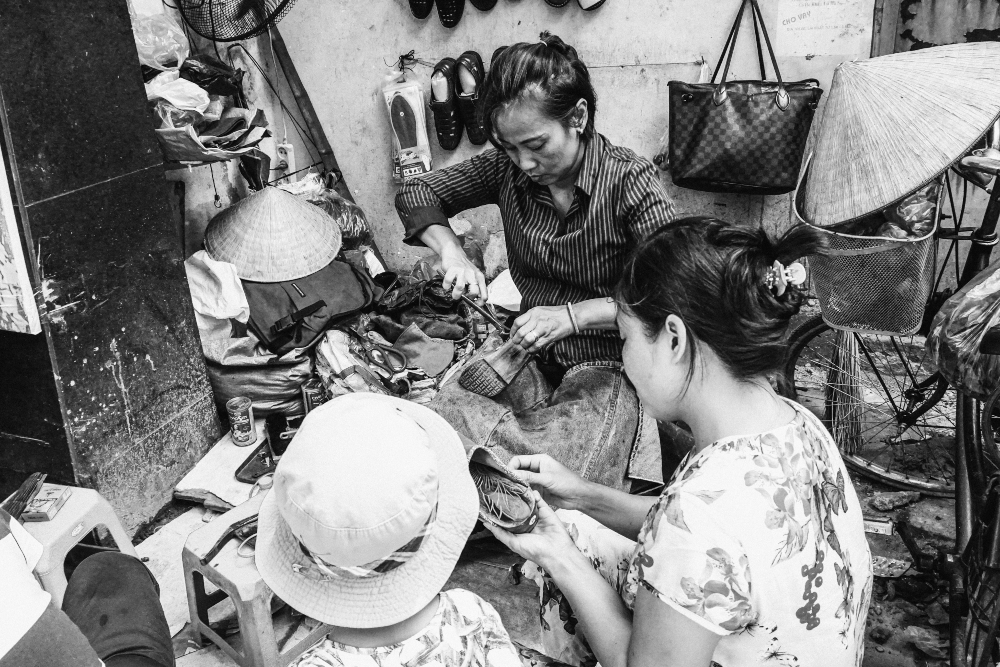
The Laughing Octopus and their production partner Teemill, are a good example of producing sustainable clothing. Every point of the production chain has been developed in order to ensure the production of sustainable t-shirts, hoodies and tote bags.
Organic Farming
Only global organic textile standard (GOTS certified) cotton is used, which along with being better for the farmers, is also much better for the ecosystem in which it is produced. Teemill’s partners use co-planting and insect traps instead of toxic pesticides and fertilisers.
To grow organic cotton requires a lot of water. As water is a limited resource in many parts of the world, using farmers in North India where reservoirs are naturally filled up by the monsoons, which provides the necessary water, is a shrewd move for the planet and the local region.
The regional government there also guarantees the price for the cotton farmers ensuring parity and security for all.
Processing
Teemill advise that the raw organic cotton is taken from the fields by camel or truck, to the ginning plants. Here the useful fibres are separated out and spun. Every part of the plant is used with the waste seeds pressed into cakes which are then sold for organic cow feed. From the remaining plant, vegetable oil is squeezed and used in food products.
In the fashion industry wastewater is a major source of pollution. Of the water Teemill’s partners use, 95% is recovered, cleaned and recirculated. The water is filtered, salt is added, and the remaining mulch is dried out and used for road markings. Once the water has been cleaned it is used again for the next batch.
Making The Products
It is essential that travel of the product is limited to reduce additional environmental damage so only 21st century manufacturing principles are used at this stage and the people and products have no need to travel along a complex supply chain.
An integrated processing plant is used where the product is spun, dyed, weaved, cut and sewn in one place. This saves on costs, is efficient and allows the facility to reinvest the savings to provide a light, clean and modern environment. A win for all involved.
The factory is audited for a wide range of social and sustainability criteria, and the plant is powered by renewable energy.
How Does Sustainable Clothing Benefit The Environment
Renewable Energy
Renewable energy is used throughout the supply chain. The Laughing Octopus then use a partner in the UK who own a solar farm and power manufacturing operations with renewables. The factory in India is powered by two wind farms – using renewable energy was a key part of The Laughing Octopus mission.
Another neat feature is that machine-to-machine communications technology allows equipment to be dynamically turned on and off so it is used only when it is needed, therefore ensuring only the energy needed is used.
Real-time printing
In order to reduce damage caused by the printing methods used in traditional t shirt printing, only lower impact inks are used. Software, machinery and automation technologies enable the products to be made in real time and products are only made after they have been ordered so there is no waste.
As the cost of more sustainable materials is high, it is imperative to obtain efficiency and productivity gains from the tech available today in order to make the business model work. It just shows that production of sustainable clothing can be done at a good cost.
Packaging
Packaging from all industries accounts for a massive percentage of the world’s waste. Worryingly by 2050 there will be more plastic in the ocean than fish. Again, The Laughing Octopus chose to work with partners who offer a more environmentally friendly approach to packaging. All packaging is plastic free and made from recycled material. The wrapping paper is pretty funky too. It also doubles up as colouring in paper, which is great for kids or even for a bit of mindful colouring for adults.
A Circular Economy
Clothing is big business and over 100 billion new items of clothing are produced every year. More worryingly every second a truck full of clothing is burned or buried in landfill. There are those who promote making your clothes last longer, only buying what you need, and fixing the clothes you’ve got. Just slowing the production of clothing down will not fix the problem on its own. Although that approach will help, a major key to the solution is to recycle the waste material into new products. This in effect closes the production loop.
Material is recovered by The Laughing Octopus and sent directly back to their supplier Teemill, who make new products from the material, and the cycle itself is renewable.
As the materials used are pure, it makes remanufacturing possible, and means products are produced that are softer, and harmless to the environment. Every product is designed to be returned at the end of its life, and remade into new products.
Eco-Friendly
The Laughing Octopus regularly runs promotions which have a direct positive impact on the environment. Even more can be done to offset the destruction caused by the fashion industry and to highlight this, regular eco drives help promote eco recovery. Examples being the recovery of 1kg of ocean bound plastic for each order, and a buy one get one tree promotion which runs on a regular basis where a tree is planted for each order received.
Why Are Sustainable Clothes So Expensive?
‘Cutting corners allows businesses to make a lot of items quickly and sell more at a lower price point. The alternative – having a sustainable supply chain – means producing less and selling at a higher price point. So much harm is behind the price tag of unethically made items.’ The Good Trade
Sustainable clothing does take a lot to produce. The costs of the raw materials are higher as the farmers are paid a fair wage. The factory environment is well managed and well maintained in line with European standards, and just because labour is cheaper in locations in other parts of the world, if produced sustainably then both the environment and labour costs are higher than the infamous factories some major brands use.
The cost of the technology involved in producing clothes in a closed loop system where waste- water and materials are re-used is high. Also the types of dye involved is costly.
So knowing the effort that goes into each piece of clothing manufactured and then factoring in the quality of production and materials, it seems fair to expect to pay a little more. Whereas a standard t-shirt may cost you anywhere between £8-18, you would expect to pay £20–35 for a certified 100% organic cotton T shirt which is sustainably produced.

Although the hike in price may at first feel like a stretch too far, it isn’t when considered that the lower end of that price range you will be lucky to have the t shirt last six months without fraying at the edges, fading and disintegrating. It is also likely to be a mixture of cotton and synthetic material or purely synthetic material which as the fibres break down, deposits more plastic into the food chain and the seas.
It is imperative that the products themselves are made from high quality fabrics and finished well. If raw edges and poor quality is apparent then the products themselves will not withstand multiple washes and will end up in landfill. Quite often with sustainable clothing brands, the mitigation to the high cost of production is to accept a lower quality garment.
This was not something that The Laughing Octopus team were prepared to do and they sought a production partner which only makes high quality clothing. Positive feedback on the softness and quality of the clothing are something which the company prides itself on. It means that the customer can feel good about how the products have been produced but also feel great wearing them. They wear well, they wash well, then when a customer has worn them out over the years, they return them and the cycle begins again.
Bio: The Laughing Octopus is an independent clothing brand with t shirts, hoodies and accessories designed to remind us that the only way we can survive this messy, wonderful life is by learning to laugh at it together!
Header image by Taylor Brandon
Georgina Caro is a certified spiritual life coach, Empath & Reiki Master. She currently lives in Cornwall, UK with her partner, two children and Charles the dog.