
We may earn money or products from the companies mentioned in this post.
If you’ve been feeling tired, stiff, foggy, or just not quite yourself lately, you might have put it down to “just getting older.” But what if it’s not age, what if it’s inflammation? Chronic, low-grade inflammation is a hidden trigger behind many of the symptoms we often accept as part of midlife. The good news? Once you understand what’s causing it, you can start to reverse it. Reducing inflammation doesn’t just ease aches and pains, it can transform your energy, clarity, mood, and overall wellbeing. Trust me I know from experience!
A Quick Personal Story
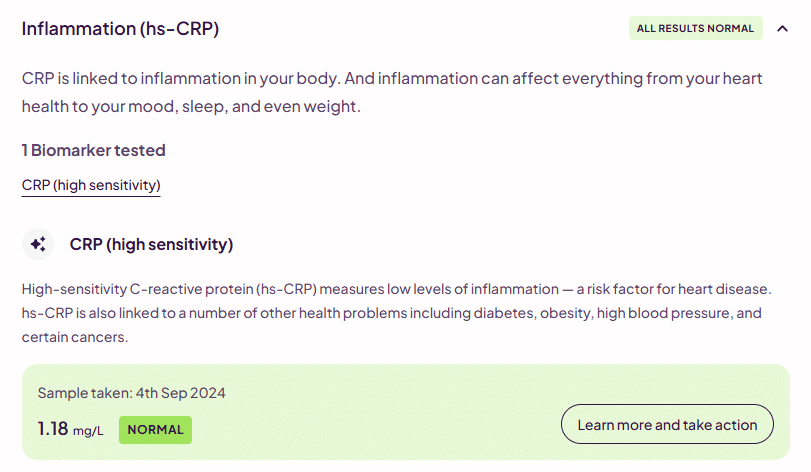
As part of my ongoing journey with health and wellbeing, I regularly have blood tests to monitor my inflammation levels and check for any nutritional imbalances. In the early days, before I began making lifestyle changes, my C-reactive protein (CRP) levels were consistently high, a clear sign that my body was dealing with chronic inflammation.
CRP is one of the most common markers used to detect inflammation in the body, and seeing those elevated numbers was a real wake-up call. I use an at-home blood testing service called *Thriva to measure my CRP levels and track my progress over time. It’s simple, accessible, and has been an incredibly helpful tool in managing my health.
Fast forward to now, after focusing on anti-inflammatory habits like improving my diet, reducing stress, and moving more, my CRP levels are back in the healthy range. I’m sharing this not to preach, but to show what’s possible. With the right changes, your body can heal.
🔥 What is Inflammation?
Inflammation is your body’s immune system’s response to a foreign body, or irritant. It could be a germ, virus or a foreign body, such as a splinter. There are times when inflammation is necessary to help your body heal, but it becomes a problem when the inflammation is long lasting, also known as chronic inflammation.
🧯 The Difference Between Acute and Chronic Inflammation
Acute inflammation is the immediate, short-term response your body has to injury or infection. It’s what causes swelling, redness, heat, or pain when you cut your finger or catch a cold. This type of inflammation is a sign your immune system is doing its job: healing damage and fighting off invaders.
Chronic inflammation, on the other hand, is a slower, longer-term process, and this is where problems begin. Instead of turning off when the threat is gone, the body stays in a constant, low-grade state of alert. Over time, this internal stress can start to damage healthy cells and tissues, contributing to a wide range of health issues including joint pain, skin problems, fatigue, and even heart disease. Many of the symptoms we associate with “getting older” like stiffness, brain fog, and poor sleep are actually signs of this hidden, chronic inflammation.

🔍 What Causes Inflammation?
There are lots of different things that can cause inflammation. Some of the most common are external injuries such as scrapes, or splinters, pathogens such as germs, bacteria, fungi or viruses, and in some cases the effect of chemicals or radiation. Conditions or diseases that have a name ending in “itis” such as Bronchitis, Cystitis, and Dermatitis all cause inflammation.
🩺 Health Issues Linked to Chronic Inflammation
Here are just some of the health issues that are linked to chronic inflammation (note how a lot of them are also perimenopause and menopause symptoms too).
- Joint pain
- Fatigue
- Brain fog
- Weight gain
- Digestive issues
- Hormonal imbalances
- Skin problems
- Autoimmune conditions
- Mood disorders

🧠 Subtle Signs You Might Have Chronic Inflammation
If you have chronic inflammation your body will be telling you. You just have to learn to listen to it. Here are some subtle signs that you’re suffering from chronic inflammation:
- Puffy face or eyes in the morning
- Persistent tiredness
- Feeling “stiff” when you wake up
- Poor sleep
- Cravings and blood sugar dips
- Constant low-level anxiety or irritability
⚠️ Top 5 Causes of Chronic Inflammation
- Poor Diet (High Sugar, Processed Foods)
The modern Western diet is full of refined sugars, unhealthy fats, and ultra-processed foods that the body simply isn’t designed to handle. These foods can spike blood sugar, disrupt hormones, and feed harmful gut bacteria, all of which contribute to ongoing inflammation. Over time, this constant internal irritation can show up as fatigue, bloating, joint pain, or weight gain. When I switched to a plant-based whole foods diet I noted a significant difference in my inflammation levels. - Chronic Stress
When you’re stressed, your body releases cortisol, a hormone designed to help you in short bursts. But if you’re constantly overwhelmed or anxious, cortisol stays high, weakening your immune system and fuelling inflammation. Many people live in a near-constant state of fight-or-flight without realising it, and their bodies pay the price in the form of aches, poor sleep, and mood swings. - Sedentary Lifestyle
Movement helps reduce inflammation by improving circulation, regulating blood sugar, and supporting lymphatic drainage. When we sit for most of the day, whether at a desk, in the car, or on the sofa, our bodies become sluggish and inflammation can start to build. Even gentle daily activity like walking or stretching can make a big difference. Personally, I try to aim for a minimum of 10,000 steps everyday, but my average is around 15,000. - Gut Imbalances
Around 70% of your immune system lives in your gut, so when the microbiome is out of balance, it can trigger widespread inflammation. Factors like antibiotics, poor diet, stress, and food intolerances can all damage the gut lining and reduce healthy bacteria, leading to symptoms like bloating, skin breakouts, low energy, and brain fog. - Environmental Toxins (Mould, Pollution, Chemicals in Skincare) We’re exposed to thousands of chemicals every day in our homes, air, water, and even personal care products. These toxins can burden the liver and disrupt the body’s natural detox systems, quietly contributing to inflammation over time. Things like mould in old buildings, heavy metals, synthetic fragrances, and endocrine-disrupting chemicals can all have a cumulative effect on long-term health.

So many of the symptoms we put down to ageing are actually your body’s way of waving a red flag, trying to tell you something’s not quite right. Chronic inflammation might be working away quietly in the background, but once you start to understand what’s causing it, you can begin to take back control of your health.
The good news? There is so much you can do to calm inflammation naturally, from food and movement to mindset and environment. In my next article, I’ll walk you through exactly how to reduce inflammation with simple, sustainable changes that can make a big difference. Your body is designed to heal, you just need to give it the right tools.
You may also like: The Power of Morning Rituals: Unleashing Growth Through Routine
🧭 What to Do Next
If you think you might be dealing with chronic inflammation, the first step is to get tested. You can book an appointment with your GP or use a reliable at-home service like *Thriva for convenient blood testing. Get £30 off your first test by using *my unique link.
I’ve been using Thriva since 2019, and it’s been a huge part of my health and wellness journey, helping me track my progress and make informed decisions. Knowing your inflammation levels (like CRP) can give you real clarity and a solid starting point for taking action.

About Georgina Caro
Georgina Caro is a certified Spiritual Life Coach, award-winning blogger, and content creator with a diploma in Vegetarian and Vegan Nutrition. Based in Cornwall, UK, she shares practical tools and personal insights to help women navigate health, wellbeing, and midlife with purpose and balance. Recently inducted into the 40s club, Georgina is passionate about living well, naturally.
Pingback: Honest Review of Supply Life: The Gut Test That Changed Everything - Georgina Caro